
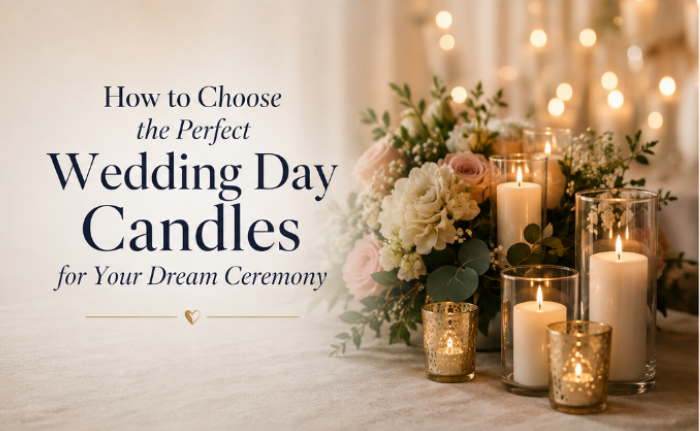
Candlelight can change the character of a wedding ceremony without requiring an elaborate installation. A few carefully placed flames can soften a formal room, bring warmth to a stone venue, or make an evening ceremony feel more intimate. The effect depends less on filling the space with candles than on choosing the right scale and giving each group of candles a clear purpose.
The best wedding day candles also need to work with the ceremony as it actually unfolds. Guests need clear paths to their seats. Flowers should remain the visual focus when they are central to the design. The photographer needs enough light to capture faces naturally. A candle arrangement that looks beautiful in a mood board can feel very different once people, movement, and venue lighting are added.
Planning should therefore begin with the ceremony space rather than with a favorite candle style. Look at where daylight enters, how far guests are from the ceremony focal point, and what the room will look like at the scheduled hour. Those details determine how much candlelight will be visible and where it will have the strongest effect.
Check the Venue Before Choosing the Candles
Ask the venue about open-flame rules before ordering anything. Some properties permit exposed tapers, while others require the flame to remain below the top of a glass enclosure. Certain venues prohibit real flame entirely. Local fire requirements can also affect what the venue is allowed to approve. Confirming the policy early prevents a design from being rebuilt days before the wedding.
Once the rules are clear, calculate quantity from the actual design rather than an arbitrary candle count. A ceremony with a long aisle may need repeated candle groupings to create visual continuity. A smaller chapel may need far fewer because the guests are already close to the light. If the design requires a large number of identical pieces, wholesale candles can be practical for maintaining consistent dimensions and color across the installation. Order enough for testing and replacements rather than assuming every candle will arrive or burn identically.
A sample burn is one of the most useful preparations you can make. Test the exact candle inside the holder planned for the ceremony and leave it burning for at least as long as it will be lit on the wedding day. This reveals how the wax behaves and how stable the flame remains. It also shows how the candle looks after an hour, which can be quite different from its untouched appearance.
Choose a Candle Shape That Fits the Setting
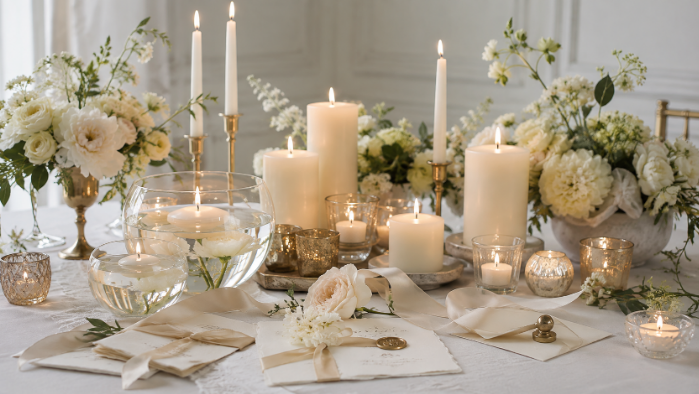

Taper candles create height without occupying much surface area, so they work particularly well when the ceremony design needs vertical lines. They can echo tall floral arrangements or architectural details without competing with them. Their slender shape also makes them useful in spaces where a broad cluster of candles would feel heavy. Because the flame is exposed and elevated, secure holders are especially important.
Pillar candles create a denser pool of light and have more visual presence. They work well near substantial architectural features and can hold their own beside larger floral arrangements. Groups with slightly varied heights tend to look more natural than identical rows. Glass hurricanes can add protection around the flame while changing the visual character from traditional candlelight to something more architectural.
Votives are better when the design needs small points of light rather than dramatic height. Their strongest use is often repetition. A line of low flames can define the aisle without blocking views, and small clusters can add light around a larger ceremony installation. Flameless candles are also worth considering where real flame is prohibited. Good versions are most convincing when the light source is partially screened by frosted glass or another holder rather than left fully exposed.
Design for the Ceremony, Not the Empty Room
Wedding décor is often photographed before guests arrive, which can distort how a candle installation will work once the ceremony begins. An aisle bordered tightly by candles may look impressive when empty but become awkward when dresses and guests move through it. Leave comfortable clearance around any flame, and keep candles away from fabric that can shift as people pass.
The ceremony focal point deserves its own approach. Candlelight should support the couple rather than create a bright wall directly behind them. Lower arrangements near the front can add warmth without interfering with sightlines. Taller candles can work farther to the sides, particularly when they reinforce the shape of an arch or floral installation. If the venue already has a strong architectural backdrop, fewer candles may produce a more refined result.
Consider the viewing distance as well. Tiny votives can disappear visually in a large ballroom when guests are seated many rows away. Taller flames have more presence from a distance, while dense groups create visible warmth even when individual candles are difficult to distinguish. In a smaller room, the opposite can happen. Too many large candles can overwhelm the ceremony area and make a carefully designed floral scheme feel crowded.
Think About Flame Quality, Color, and Scent
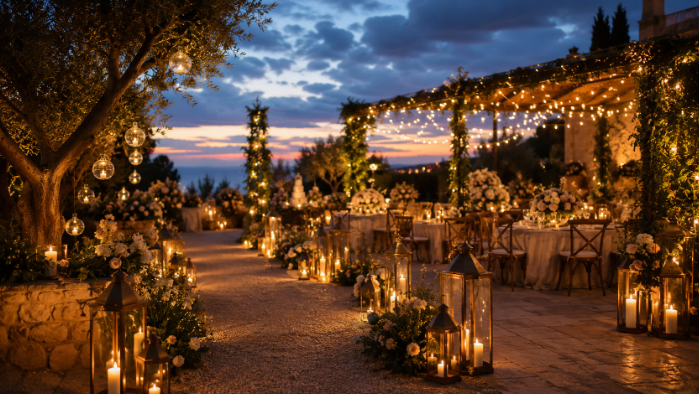
Candle color should be checked against the wedding materials in person. “White” can lean cool, creamy, or slightly gray depending on the wax and manufacturer. That difference becomes visible beside ivory linens or warm-toned flowers. If several candle types will appear together, compare them under lighting similar to the venue rather than relying on online product photographs.
Wax type alone does not guarantee a cleaner or more attractive burn. Wick size and candle construction affect how the flame behaves, and drafts can make any candle flicker or smoke. Air-conditioning vents deserve particular attention during setup because a candle placed directly in moving air may burn unevenly. Testing the finished arrangement is more informative than choosing a candle solely because one wax is marketed as superior to another.
For most ceremonies, unscented candles are the safer design choice. Fragrance is highly personal, and a scent that seems subtle at home can become much stronger when many candles burn at once. Flowers and perfumes already contribute scent to the ceremony space. Unscented candles provide the visual effect without adding another competing element, which is especially considerate in enclosed venues.
Plan How the Candles Will Work on the Wedding Day
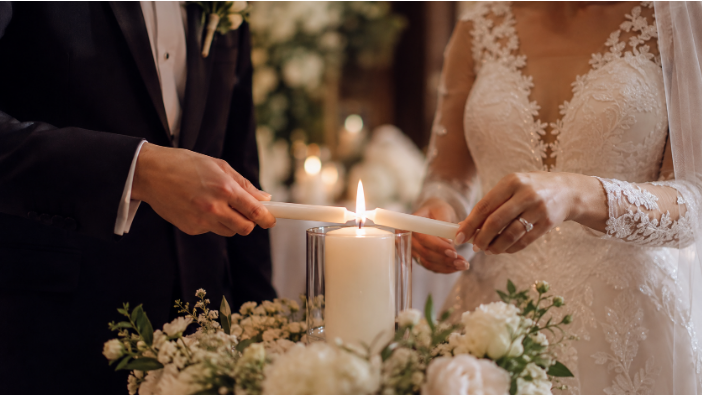

Decide in advance who is responsible for setting the candles and lighting them. Timing matters because candles lit too early may be noticeably burned down before the ceremony starts. Lighting them too late can leave staff rushing while guests are entering. The planner, venue team, or florist should know the expected burn time and the order in which the candles need to be lit.
Photography deserves a quick conversation as well. Candlelight becomes much more visible as ambient light decreases, so an evening ceremony can produce a very different result from a midafternoon ceremony using the same arrangement. A photographer can explain how the venue’s existing light will interact with the flames. This is particularly useful when the couple expects candlelight to be a prominent part of the photographs rather than a subtle background detail.
Finally, consider what happens to the candles after the ceremony. Some installations can be transferred to the cocktail hour or reception while guests are elsewhere. Others are better left in place because moving hot wax and glass creates unnecessary risk. Planning that transition before the wedding keeps the design useful for longer and avoids turning beautiful ceremony décor into a last-minute logistical problem.